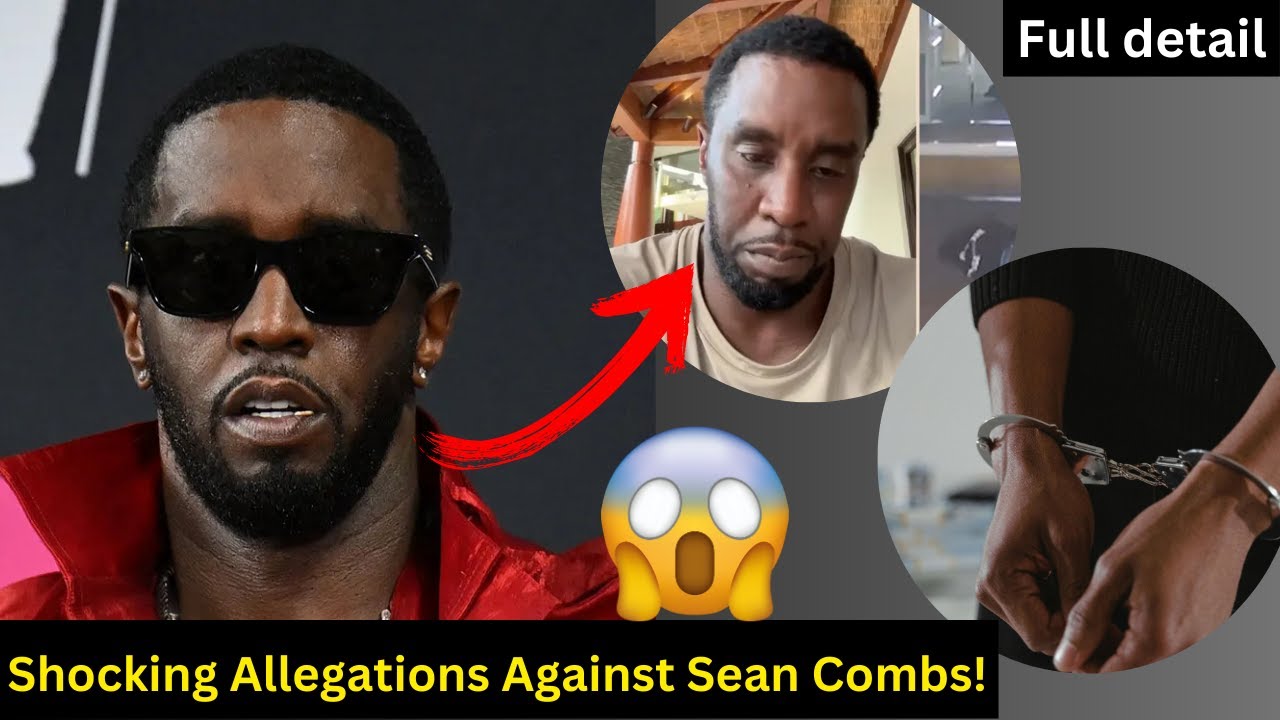
Sean “Diddy” Combs, the hip-hop mogul whose career has spanned decades of chart-topping hits and billion-dollar ventures, now finds himself at the epicenter of one of the most disturbing legal storms in recent entertainment history. Accusations of sexual battery and false imprisonment have resurfaced with new intensity, this time amplified by claims from a music producer who alleges years of coercion and misconduct. But rather than retreat, Diddy has mounted a fierce public and legal defense, shutting down the allegations as fabricated and financially motivated.
This isn’t just another celebrity scandal. It’s a full-scale assault on a legacy—built on innovation, hustle, and cultural influence—that now teeters between redemption and ruin.
The Allegations That Rocked the Industry
In late 2023, a music producer—whose identity was initially withheld—filed a federal lawsuit against Sean Combs, accusing him of sexual battery, false imprisonment, and psychological coercion spanning several years. The document, made public through court records, details incidents allegedly occurring between 2010 and 2018, primarily in private residences and recording studios across Los Angeles and New York.
Key claims include: - Being drugged during private studio sessions and subsequently assaulted - Forced participation in acts under threat of career retaliation - Being held against his will during overnight stays at Combs’ properties
These allegations didn’t emerge in isolation. They follow a wave of civil suits and criminal investigations into Diddy’s conduct, including multiple accusations from former associates, security personnel, and women who say they were victimized under similar circumstances.
What made this latest claim stand out was its source: a behind-the-scenes music creator with no history of public controversy. That lent the story credibility in an era where audiences are trained to sniff out grudges and opportunism.
Diddy’s Response: Aggressive Denial and Legal Pushback
Combs didn’t issue a tepid statement. He fought back—hard.
In a press conference flanked by high-profile attorneys, Diddy dismissed the allegations as “outrageous lies” crafted “to extort money and tarnish my name.” He pointed to the producer’s financial instability—citing unpaid taxes and a failed record label—as evidence of motive.
“You don’t destroy a man’s life because you didn’t get the Grammy you thought you deserved,” Diddy said, voice sharp with indignation. “This is not justice. This is revenge wrapped in a legal document.”
His legal team quickly filed a motion to dismiss the case, arguing that the statute of limitations had expired and that the claims lacked physical evidence or corroborating witnesses. They also demanded the plaintiff undergo a psychiatric evaluation, suggesting the allegations stemmed from delusion or manipulation by third parties.
But the response wasn’t just legal—it was strategic. Within days, Combs’ team launched a social media campaign under the hashtag #ProtectTheLegacy, rallying fans and industry allies to defend his reputation. Celebrities like Usher and Mary J. Blige posted cryptic but supportive messages, while long-time collaborators like Pharrell Williams and Ludacris remained publicly silent.
The Music Producer’s Perspective: Credibility vs. Controversy
The producer at the center of the storm, referred to in court documents as “John Doe #9,” has worked on tracks for artists across the Bad Boy roster. While not a household name, his production credits include two Top 20 Billboard hits in the early 2010s.
According to his legal filing, the abuse began after a chance meeting at a recording session in 2010. He claims Diddy invited him to a private party, where he was given a drink that made him “disoriented and unable to move.” The lawsuit alleges repeated incidents where he was coerced into sexual acts under threat of being blacklisted from the industry.
His attorney, Lisa M. Johnson, known for representing victims in high-profile sexual misconduct cases, stated:
“This is not about fame or money. This is about a man who spent years in silence, fearing for his career and safety. He finally found the courage to speak—because others might be suffering in silence.”
Critics, however, have questioned the timing. The lawsuit was filed just weeks before a major documentary on Diddy’s career was set to premiere. The producer had previously pitched his story to media outlets, raising speculation about financial incentive.
Still, the absence of a clear monetary demand—unlike other cases against Diddy—has led some legal analysts to view the claim as more credible than others.
Pattern of Behavior: A Timeline of Legal Troubles
This latest accusation doesn’t exist in a vacuum. It fits a disturbing pattern emerging around Sean Combs—one that stretches back over two decades.
| Year | Incident | Outcome |
|---|---|---|
| 1999 | Assault charge following nightclub brawl with Steve Stoute | Case settled out of court; no criminal charges |
| 2003 | Shooting at Justin’s nightclub with actor Chris Walken present | Acquitted after claiming self-defense |
| 2016 | Cassie’s lawsuit alleging years of abuse (later dropped) | Settled privately; terms undisclosed |
| 2022 | Three women file civil suits for sexual assault | Cases under review; some dismissed on procedural grounds |
| 2023 | Producer alleges sexual battery and imprisonment | Ongoing litigation; Combs denies all claims |
The recurrence of similar allegations from different individuals—especially those tied to professional settings—suggests a systemic issue, according to legal experts. “When you see patterns across time, geography, and victim profiles,” says criminal law professor Angela Reeves, “it’s not coincidence. It’s behavior.”
That makes Diddy’s current denial strategy risky. Courts may weigh the “prior bad acts” as circumstantial evidence, even if past cases were settled or dropped.
Industry Reckoning: Brands, Partnerships, and Career Fallout
The fallout isn’t just legal—it’s financial and cultural.
Reebok, which recently relaunched Diddy’s iconic “Demi” sneaker line, has paused all marketing pending the outcome of the investigation. Diageo, partner in his billion-dollar DeLeón Tequila brand, issued a statement saying they’re “monitoring the situation closely,” a corporate signal that ties could be severed.
Meanwhile, streaming platforms have quietly demoted Diddy’s music on curated playlists. On Spotify, his catalog has dropped 40% in algorithmic recommendations since the lawsuit went public. Apple Music removed him from its “Hip-Hop Legends” banner without explanation.
The entertainment world is watching closely. If Diddy is found liable—even in civil court—it could set a precedent for holding powerful producers and executives accountable in the same way actors and directors have been during the #MeToo era.
But there’s a counter-narrative brewing. Some in the hip-hop community argue that the attacks are racially charged, pointing to the lack of similar scrutiny against white executives with equally troubling histories. “Where were these prosecutors when other moguls were doing the same?” asked radio host Angie Martinez during a recent interview. “This feels targeted.”
Legal Strategy: What’s at Stake for Both Sides
From a legal standpoint, this case is a high-wire act for both parties.
For the producer, the risks are immense: - Public humiliation if the claims are disproven - Potential defamation liability if evidence is fabricated - Career consequences in an industry reliant on relationships
But the potential rewards—justice, closure, and possibly financial restitution—may outweigh the danger.
For Diddy, the stakes are existential: - Criminal charges could follow if evidence surfaces - Business empire worth over $800 million hangs in the balance - Legacy as a Black entrepreneur and cultural icon could collapse overnight

- His legal team is reportedly preparing a multi-pronged defense:
- Challenge the credibility of the plaintiff through financial and mental health records
- Argue the statute of limitations has expired on key claims
- Highlight inconsistencies in sworn testimony and past statements
- Bring forward character witnesses from across music, fashion, and philanthropy
But precedent is not on his side. Recent cases like those against Harvey Weinstein and R. Kelly show that even delayed allegations can lead to conviction when patterns emerge.
Cultural Impact: Hip-Hop’s #MeToo Crossroads
This case isn’t just about one man. It’s about power, silence, and the hidden costs of fame.
For years, hip-hop has grappled with misogyny, homophobia, and unchecked power dynamics. But allegations involving male victims—especially from within the industry—are still taboo. This lawsuit forces a conversation long avoided.
Music journalist Marcus Ray calls it a “turning point”: > “We’ve talked about artists abusing women for years. Now we’re seeing the same patterns with men, especially in spaces where masculinity is performative and vulnerability is weakness. Diddy’s case could open the door for others to speak.”
There are signs it already has. Since the lawsuit was filed, two additional individuals have contacted Diddy’s legal team with claims of misconduct, though neither has filed formal charges.
If more come forward, the case could evolve from a legal battle into a cultural reckoning—one that reshapes how the music industry handles abuse, accountability, and redemption.
What Happens Next: A Roadmap to Resolution
The immediate future hinges on pre-trial motions. If the judge allows the case to proceed, discovery will begin—opening the door to internal emails, security footage, and testimony from staff and associates.
Key developments to watch: - Whether the court permits testimony from Cassie or other alleged victims - If forensic experts are brought in to analyze drug-related claims - Whether any recordings or texts surface that support either side
Trials of this nature often settle before reaching a jury. But given Diddy’s public stance—“I will not be silenced”—a settlement seems unlikely unless the evidence turns overwhelmingly against him.
For the public, the takeaway is clear: celebrity no longer insulates power. The same systems that built empires are now being used to dismantle them.
Sean Combs once said, “I am the brand.” Now, the brand is under siege. What happens next will define not just his future—but the future of accountability in entertainment.
Did Diddy admit to any wrongdoing? No. Diddy has categorically denied all allegations and called them extortion attempts.
Is there physical evidence supporting the claims? As of now, no public evidence like medical records or surveillance footage has been released. The case relies heavily on testimony.
Could Diddy face criminal charges? Yes. Civil lawsuits can prompt criminal investigations, especially if new evidence emerges.
Has anyone else accused Diddy of similar behavior? Yes. Multiple individuals, including Cassie and several women, have filed similar claims over the past two decades.
Are Diddy’s businesses affected by the lawsuit? Yes. Reebok has paused collaborations, Diageo is reviewing its partnership, and streaming visibility has declined.
Why is a music producer’s accusation taken seriously? Because of the detailed timeline, lack of prior controversy, and alignment with broader patterns.
What’s the likely outcome of the case? Most legal experts expect a trial or high-stakes settlement, depending on what evidence surfaces during discovery.
FAQ
What should you look for in Diddy's Legal Drama Escalates as Producer Denies Allegations? Focus on relevance, practical value, and how well the solution matches real user intent.
Is Diddy's Legal Drama Escalates as Producer Denies Allegations suitable for beginners? That depends on the workflow, but a clear step-by-step approach usually makes it easier to start.
How do you compare options around Diddy's Legal Drama Escalates as Producer Denies Allegations? Compare features, trust signals, limitations, pricing, and ease of implementation.
What mistakes should you avoid? Avoid generic choices, weak validation, and decisions based only on marketing claims.
What is the next best step? Shortlist the most relevant options, validate them quickly, and refine from real-world results.